Crypto: How Brian Jung Plans to Make Millions in the Next Cycle
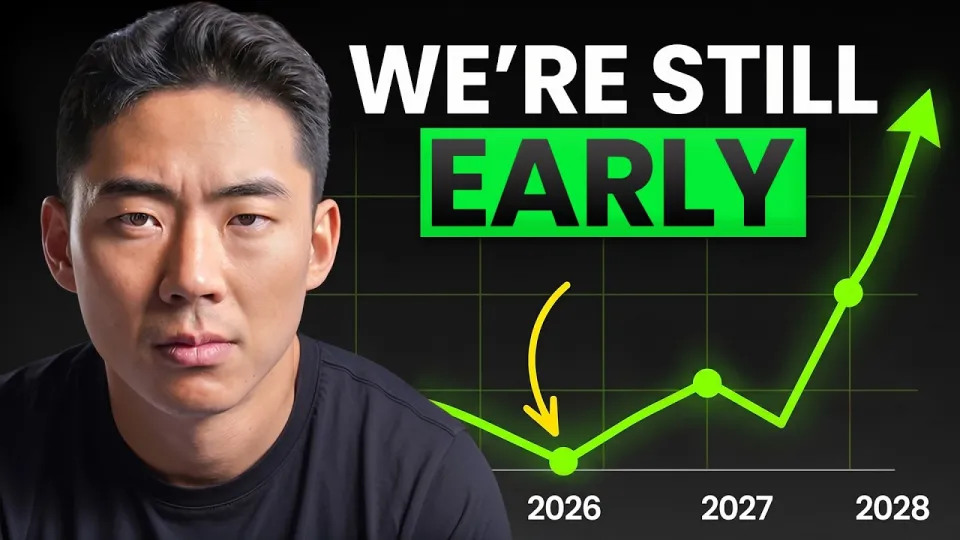
Video: my plan to make millions in crypto 2027
You can order the same kind of articles for your own video to boost it on YouTube and Google. Just message the Telegram bot @sat_sit_bot. It writes articles around your video, embeds the video and publishes them on popular niche websites (no ads). Your first 50 articles are free.
· based on the channel Brian Jung
Crypto investing works best as a written plan rather than a reaction to headlines: Brian Jung's approach for the coming cycle is to anchor a portfolio in Bitcoin and Ethereum, size altcoin positions deliberately, and buy into specific narratives instead of spraying money across every new token. His breakdown, published under the title "my plan to make millions in crypto 2027," is less a price prediction than a framework for surviving volatility long enough to capture an uptrend. Jung also points viewers toward the Kaizen Pro waitlist for his paid research and tools.
Why Brian Jung stays bullish on crypto
The bullish case rests on three pillars rather than a single chart pattern.
- Liquidity and access. Spot Bitcoin and Ethereum ETFs have turned crypto from a niche allocation into something a financial advisor can put in a client account. That creates a persistent, rules-based bid that did not exist in earlier cycles.
- Institutional infrastructure. Custody, prime brokerage and tokenized fund products have matured to the point where large allocators can participate without building custom plumbing.
- Supply discipline. Bitcoin's issuance schedule is fixed, and a meaningful share of circulating coins sits with long-term holders, which tightens the float when demand rises.
Jung's framing is that crypto is still an early-adoption asset, and that the gap between institutional demand and available liquid supply does most of the work in a bull market. The counterargument deserves equal space: the same ETFs that bring inflows can bring outflows, and a macro shock that forces risk-off positioning hits crypto harder than most asset classes because leverage is embedded in the market structure.
The narratives Jung expects to drive the next cycle
Narratives matter in crypto because capital rotates toward whatever story has the strongest near-term catalysts, and Jung organizes his watchlist around a handful of them.
- Bitcoin as digital gold and reserve asset. ETF flows, corporate treasury adoption and sovereign-level discussion keep Bitcoin at the center of the asset class.
- Ethereum and the Layer 2 economy. Staking yield, restaking and rollup activity give ETH a cash-flow-like story that pure memecoins cannot match.
- High-throughput Layer 1s. Chains such as Sui and Solana compete on user experience and cheap transactions, and they attract speculative capital quickly when sentiment turns.
- Real-world asset tokenization. Treasury products, private credit and fund shares moving on-chain bring in yield-seeking capital that behaves differently from retail speculation.
- Consumer and payments rails. Stablecoins and on-chain payment infrastructure are the use case most likely to reach people who never open a wallet intentionally.
Jung's point is not that every narrative pays off at once, but that a portfolio should hold exposure to the ones with real usage behind them. A narrative with no revenue, no users and no fee capture is a trade, not an investment.
The plan itself: a barbell, not a lottery ticket
The core of the strategy is a barbell: a large, boring base and a smaller, aggressive sleeve.
Step 1 — Set the base. Bitcoin and Ethereum form the majority of the portfolio. This is the part that captures the broad uptrend and does not require being right about which altcoin wins.
Step 2 — Cap the altcoin sleeve. A defined percentage, sized so that a 70–90% drawdown in that sleeve does not break the overall plan. Altcoins routinely fall that far in bear markets, and position sizing is what separates a bad year from a ruined account.
Step 3 — Buy narratives, not tickers. Allocate within the sleeve to the themes above, with a written thesis for each position: what has to happen for it to work, and what would prove the thesis wrong.
Step 4 — Take profits on the way up. Scaling out in tranches, rather than waiting for a single top, converts paper gains into realized ones. Unrealized gains have a habit of disappearing in a week.
Step 5 — Keep dry powder. A cash or stablecoin reserve lets you add during capitulation instead of selling into it.
Jung's own framing is directional rather than precise: the plan is built to participate in an uptrend, not to call the exact month of a top.
Typical viewer questions and doubts
The reaction to cycle calls like this one is split, and the doubts are worth addressing directly.
"Didn't people say the same thing last cycle and lose everything?" Yes, and the reason is usually leverage and concentration, not the asset class. Someone who bought altcoins with borrowed money or put everything into one token had no plan for a 60% drawdown. A barbell with a capped altcoin sleeve is designed to survive exactly that scenario.
"Isn't regulatory clarity bad for crypto?" Clarity that legitimizes the asset class while keeping banks from controlling it is generally treated as bullish. Rules that define what a security is, and who can custody assets, reduce the risk premium institutions demand.
"When is the cycle top?" Nobody knows, and estimates range from the near term to several years out. That uncertainty is precisely why the plan uses tranche selling and position sizing instead of a single exit price.
"Isn't this just permabull content?" The bullish case is explicit and falsifiable: if ETF flows reverse, liquidity tightens and on-chain usage declines, the thesis weakens. A plan should state what would change your mind.
Risks that can break the plan
Any crypto plan has to price in the ways it fails. Regulatory action that restricts access to ETFs or staking would remove a core pillar of the bull case. A macro recession that forces liquidation across risk assets would hit altcoins first and hardest. Smart-contract exploits, exchange failures and token unlocks can wipe out individual positions regardless of the broader trend. And the opportunity cost is real: capital parked in a flat market for two years is capital that did nothing.
The practical defense is the same in every case: size positions so no single failure is fatal, custody assets properly, and review the thesis on a schedule rather than during a price candle.
Where to follow the research
Jung distributes his market work through several channels:
- Kaizen Pro waitlist — access to his paid research product.
- Free crypto market report newsletter — regular market commentary by email.
- X / Twitter and Instagram — shorter updates.
- Risks and disclaimers document — the full disclosure behind his content.
Bottom line
Brian Jung's crypto plan for the coming cycle is a barbell: a Bitcoin and Ethereum base, a capped altcoin sleeve built around narratives with real usage, tranche profit-taking and a cash reserve. The bullish case depends on ETF-driven demand, institutional infrastructure and fixed Bitcoin supply, and it fails if flows reverse or a macro shock forces deleveraging. The video breakdown comes from Brian Jung, who presents the framework as education rather than financial advice. Anyone following it should treat position sizing and risk limits as the part that actually determines the outcome — and can review the full research offer through the Kaizen Pro waitlist.
Key takeaways
- Brian Jung frames his bullish crypto case around liquidity, institutional access and the narratives that pull capital into altcoins.
- The core of the plan is a barbell: a large Bitcoin and Ethereum base with a smaller, deliberate altcoin sleeve.
- Jung publishes his research through the Kaizen Pro waitlist and a free crypto market report newsletter.
- Viewer reaction splits between long-term believers and traders who lost money following 2025 cycle calls.
- Regulatory clarity that keeps banks out of crypto is treated by many viewers as bullish, not bearish, for the asset class.
Questions & answers
What is Brian Jung's crypto plan for the next cycle?
It is a barbell strategy: a majority allocation to Bitcoin and Ethereum, a capped altcoin sleeve focused on specific narratives, profit-taking in tranches on the way up, and a stablecoin reserve for drawdowns. The goal is to participate in an uptrend without risking the whole account on one token.
Why is he bullish on crypto despite past cycle losses?
He points to spot ETF access, maturing institutional custody and infrastructure, and Bitcoin's fixed issuance schedule. Those factors create demand that did not exist in earlier cycles, though the same ETFs can also produce outflows during risk-off periods.
Which narratives does the plan focus on?
Bitcoin as a reserve asset, Ethereum and its Layer 2 economy, high-throughput Layer 1 chains such as Sui and Solana, real-world asset tokenization, and stablecoin payment rails. Each theme is judged on actual usage and fee capture rather than hype alone.
How should altcoin exposure be sized?
Small enough that a 70–90% drawdown in the altcoin sleeve does not damage the overall portfolio, with a written thesis and exit plan for every position. Concentration and leverage are what turn a normal bear market into a total loss.
Source: my plan to make millions in crypto 2027 · Markdown version